Open-source customisation
Token Monitor team AI usage dashboard
See how your team actually uses AI: who uses which tools, how much, at what cost, and how much of each subscription is left. We collect usage records from each computer with the open-source Token Monitor (MIT; it supports 43+ AI coding tools such as Claude Code, Codex and Cursor), combine the machines through a Hub, and add the web dashboard the project does not ship, so the whole team's usage is visible in a browser.
What this system does
- Per computer: which AI tools each colleague's machine uses, today's and this month's tokens and cost, and when it last reported
- Reads only the usage records each tool leaves on the computer (token counts, model, time); it does not read prompts or code
- Remaining quota and reset times for Claude, Codex and other plans, plus a daily usage trend for the last 14 days
- We can also change Token Monitor's source (MIT licensed): store usage in a database, have new computers join the Hub automatically and run your own update channel, so rolling it out to a team does not mean setting up each machine by hand
Inside the product
Live screens. Fields containing customer data are masked. Tap a screenshot to see it full size.
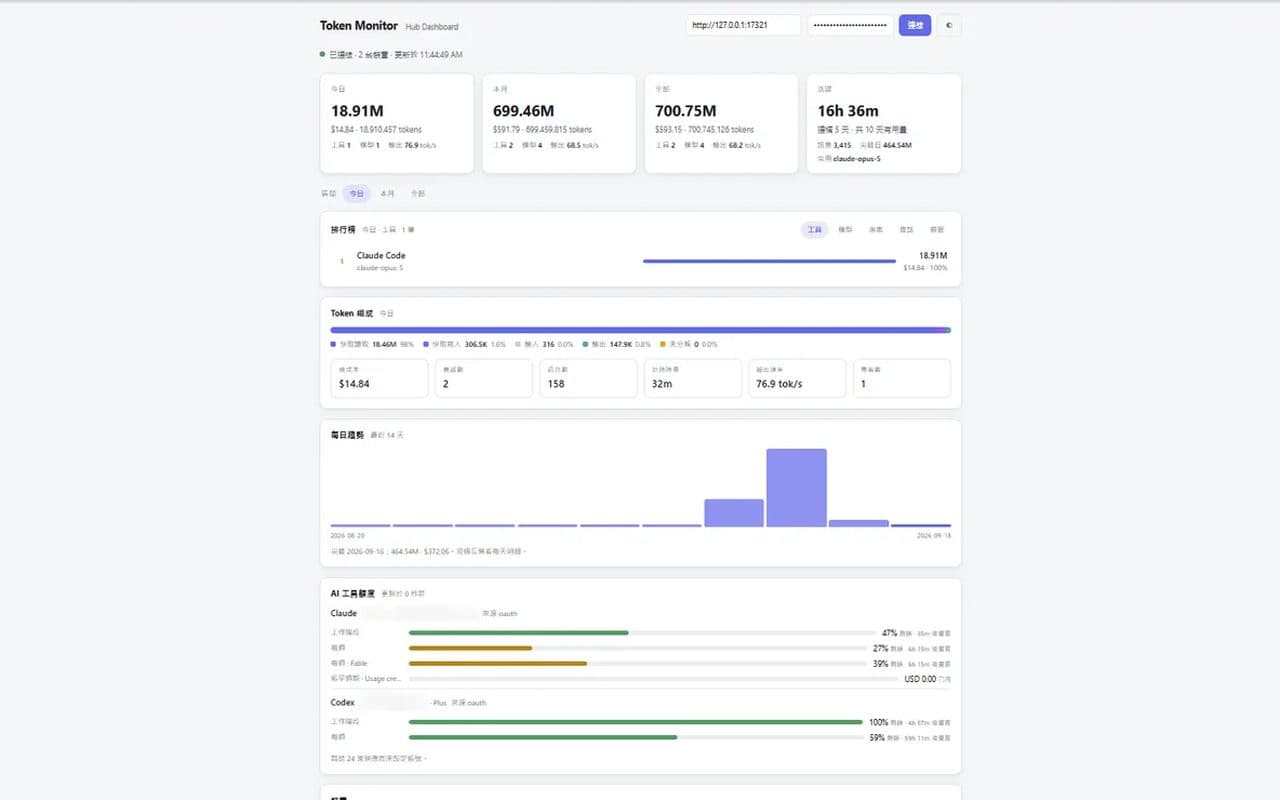
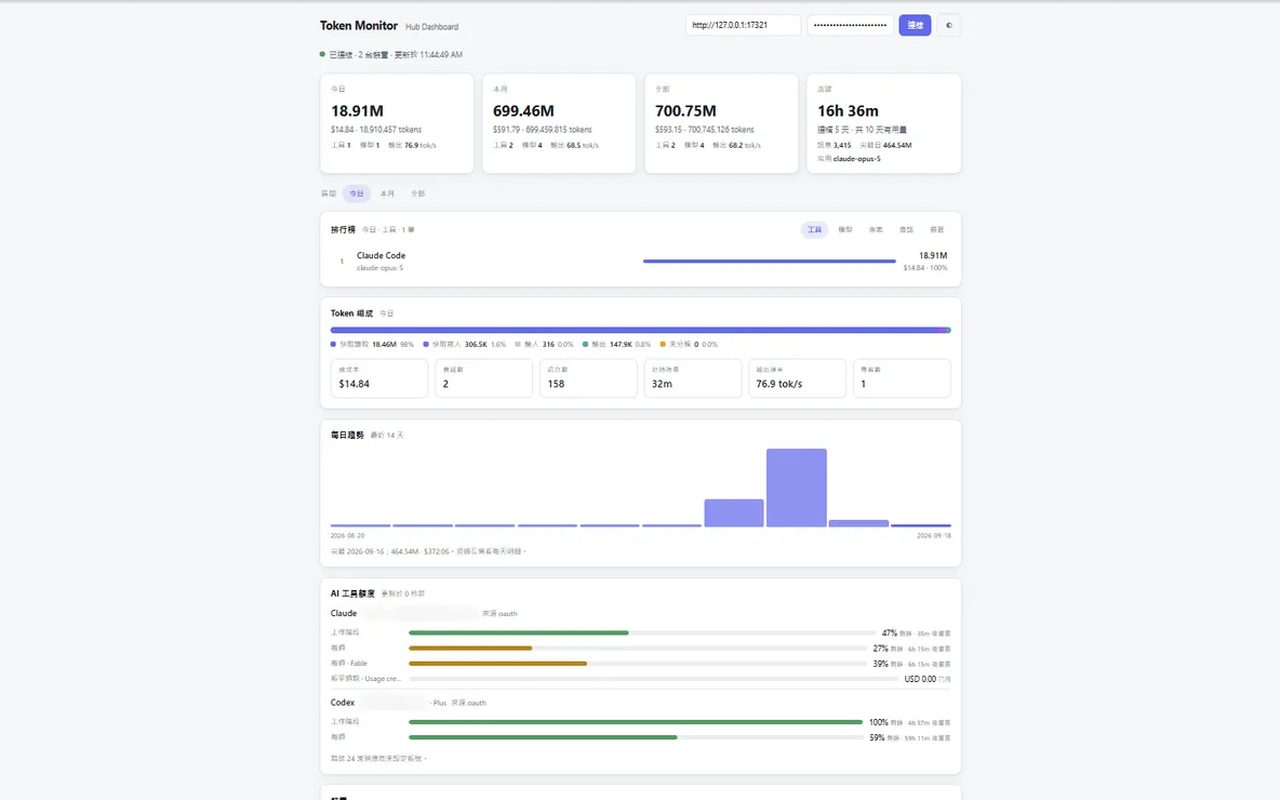
Top of the dashboard: today, this month, all time and activity cards, followed by the tool ranking, token breakdown, daily trend and remaining quota per plan. 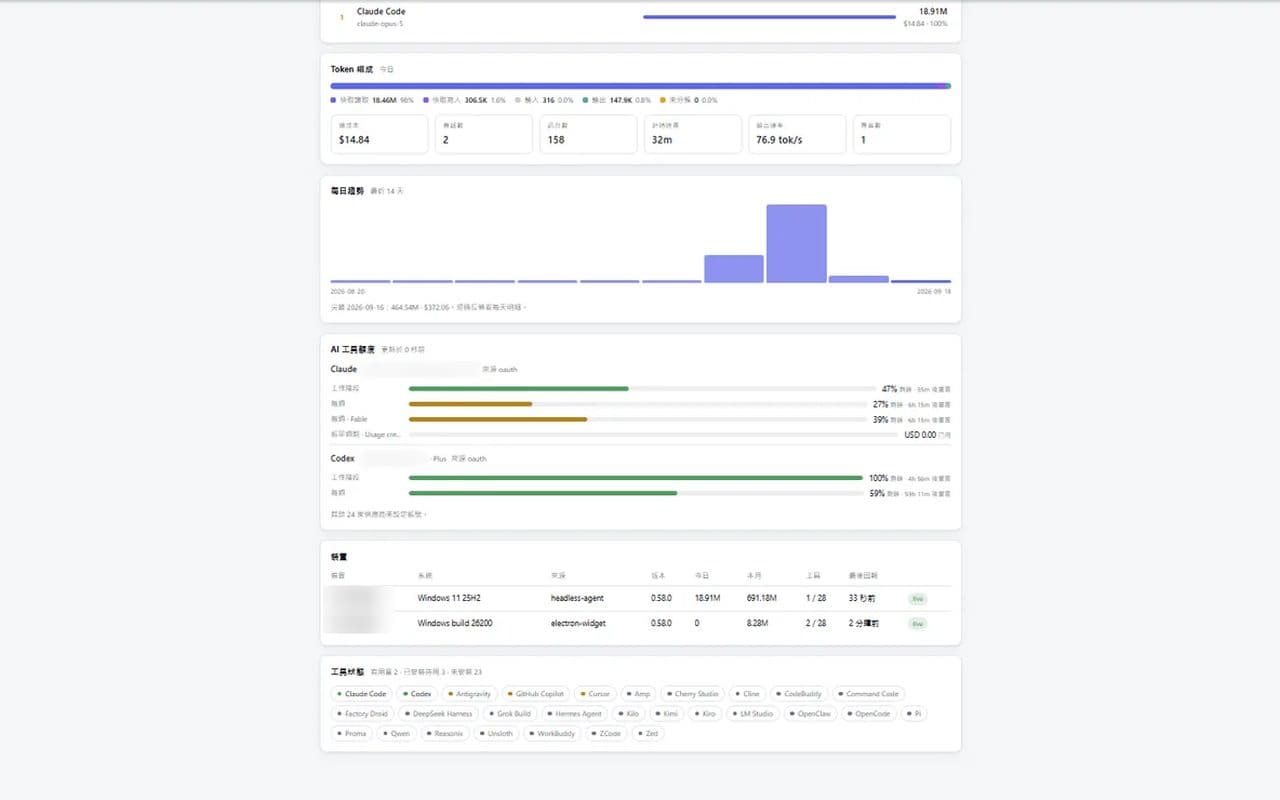
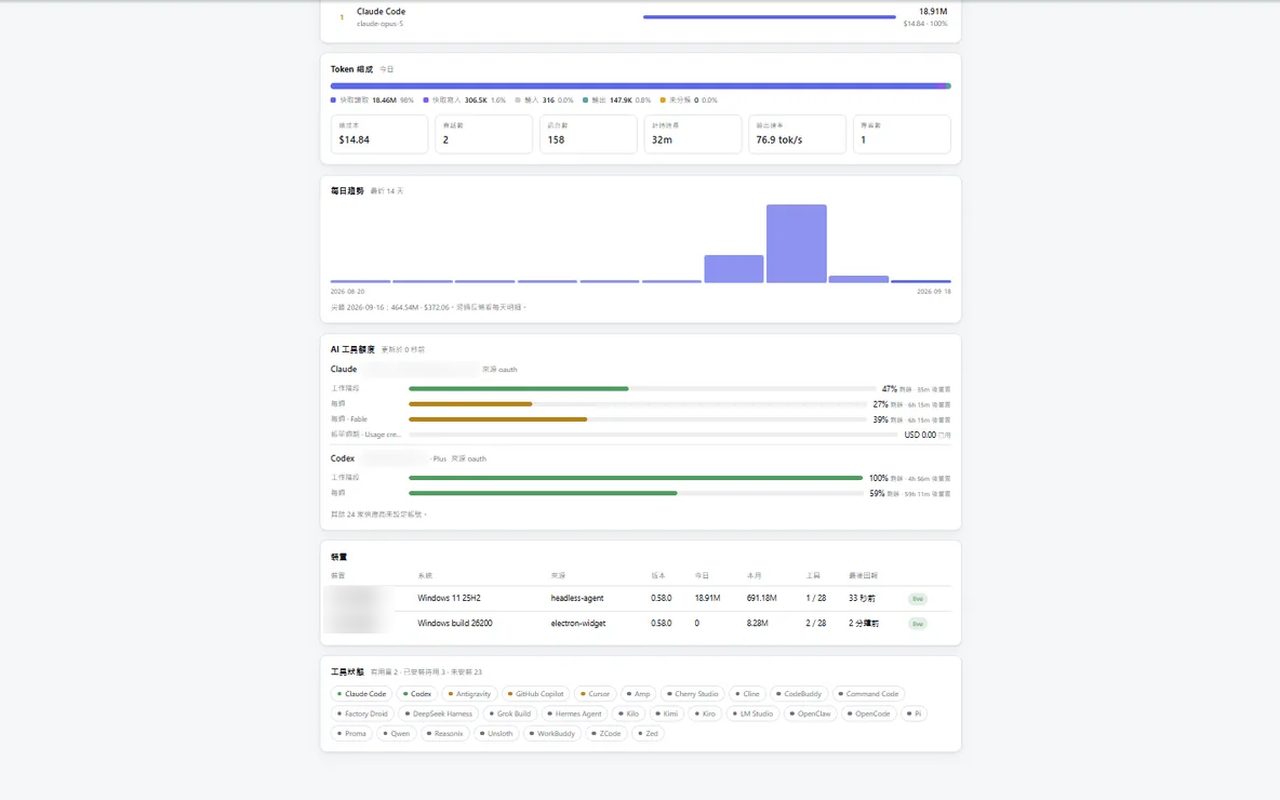
Bottom of the dashboard: each computer's OS, version, today's and this month's usage, and last report time; computer names are blurred.
More work
Cases from the same service come first.
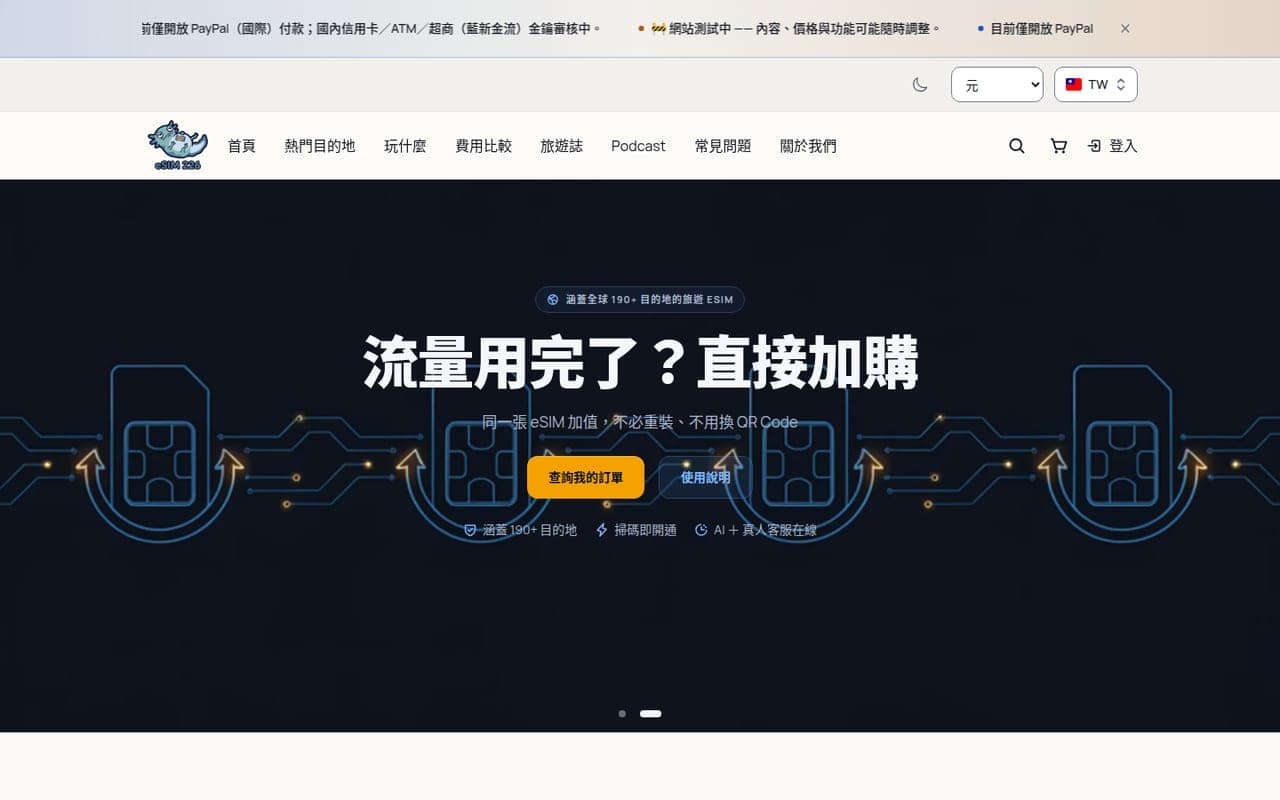
E-commerce
eSIM 226 storefront
A travel eSIM store in eight languages with multi-currency pricing and two Taiwanese payment gateways. Paid orders are provisioned with the upstream supplier automatically and the install email goes out on its own.
- Eight locales and multiple display currencies, so Japanese buyers see yen
- Automatic provisioning across two suppliers, with failover
Next.js · PostgreSQL · Keycloak · ECPay/NewebPay · Kubernetes
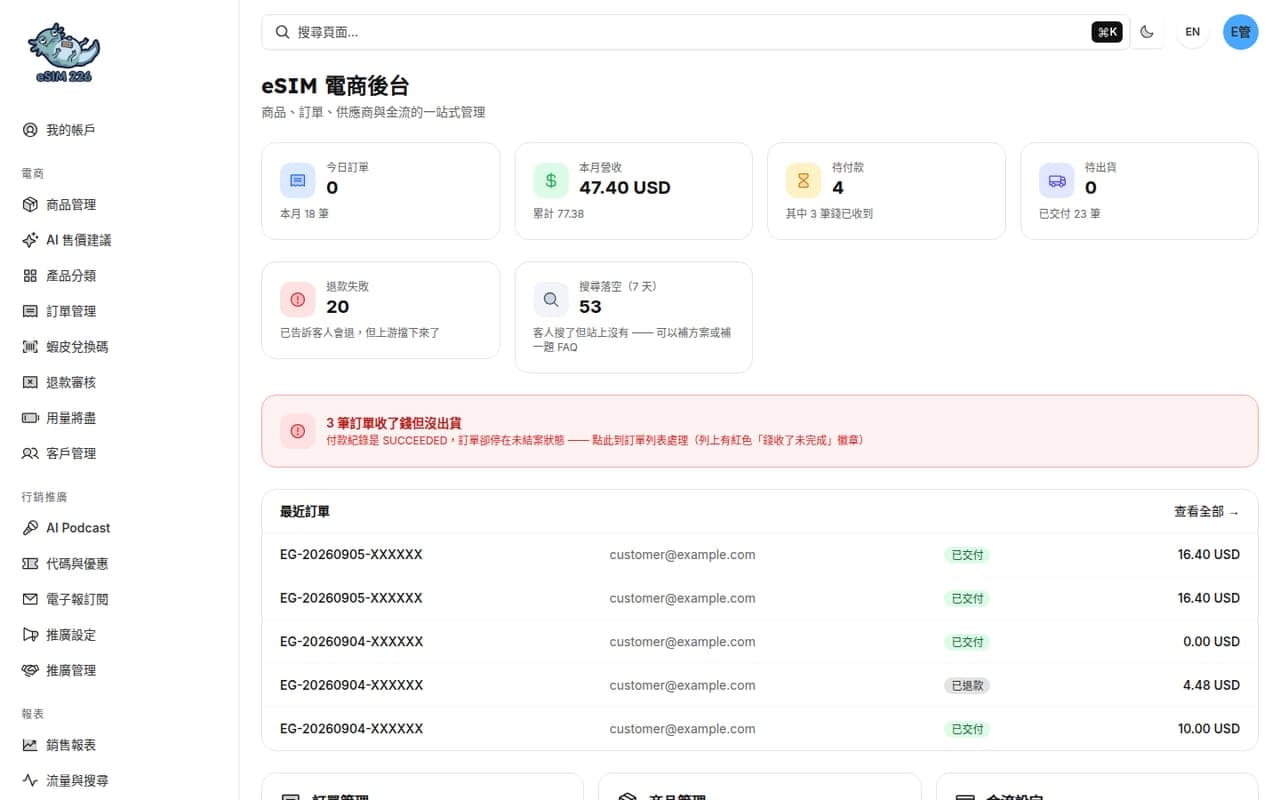
Admin system
eSIM back office
The operations side of the same store: products, pricing, orders, refunds, suppliers and payments in one place. It actively surfaces problems like "paid but never fulfilled" instead of waiting to be asked.
- Orders, revenue, unpaid and unfulfilled counts at a glance
- AI pricing suggestions and bulk listing changes
Next.js · PostgreSQL · Keycloak · GA4 Data API
See insideE-commerce site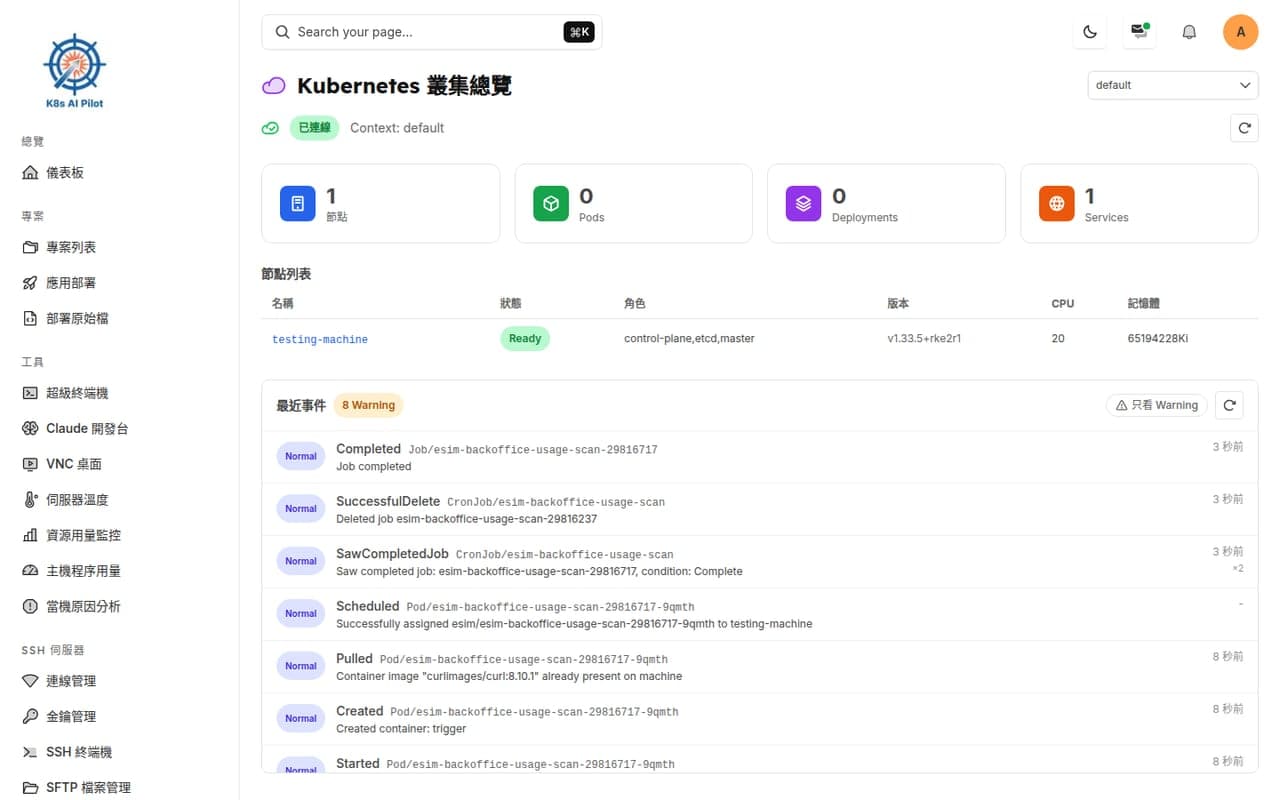
Harness / internal tools
v-terminal developer platform
Our own browser-based platform for building and operating software: terminals, Kubernetes, Helm GitOps deploys, CI, registry and an AI coding agent in one screen. This website was shipped from zero using it.
- Git push to self-hosted runner to Harbor to Helm sync, one pipeline
- AI console: send a task from your phone, the agent reads the spec, edits and tests
Next.js · Node.js · SQLite · Kubernetes client · Claude Agent SDK
See insideHarness